
Asia’s livestock and dairy sector is highly diverse, with systems ranging from intensive farming to pastoral production. This diversity varies significantly between countries, reflecting distinct agricultural practices and economic, social, environmental, and cultural conditions. Dairy Asia has announced a new initiative, the “Dairy Asia: Bilateral Cooperation (1X1),” designed to strengthen bilateral cooperation among member countries. The initiative aims to promote knowledge sharing, support Public-Private Partnerships (PPPs), increase private sector participation, and address common challenges and solutions within the dairy sector in member countries. The initiative gives a great opportunity to members to learn from each other.
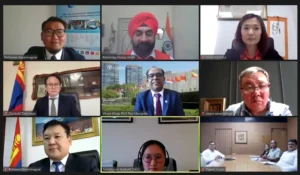
Dedicated to World Milk Day, the Dairy Asia bilateral web meeting was jointly organized between India and Mongolia on May 30, 2022. The Dairy Asia Secretariat convened the event in collaboration with the Ministry of Food, Agriculture, and Light Industry of Mongolia, the National Dairy Development Board of India, the Gujarat Cooperative Milk Marketing Federation, the Mongolian Food Industry Association, and the Mongolian Dairy Farmers’ Association.
The meeting commenced with opening remarks from Mr. B. Altansukh, Director General of the Ministry of Food, Agriculture, and Light Industry of Mongolia, and Mr. Shri Meenesh C. Shah, Chairman of the National Dairy Development Board of India. Welcoming addresses were subsequently delivered by His Excellency Mr. D. Ganbold, Ambassador of Mongolia to India; His Excellency Mr. M. P. Singh, Ambassador of India to Mongolia; and Dr. Vinod Ahuja, the UN FAO Representative in Mongolia.
The session attracted over 70 delegates from both countries and various knowledge partners. Under the moderation of Mr. Batbaatar Bayarmagnai, CEO & Coordinator of Dairy Asia, the meeting featured a series of presentations, including:
India, as the world’s largest milk-producing nation, has cultivated a robust dairy sector through foundational programs such as the “White Revolution” and the “Amul model,” which emphasize cooperative development and are further supported by a national School Milk Program. A significant achievement is India’s self-sufficiency in milk and dairy products for its population of 1.3 billion, in addition to being an exporter to over 50 countries.
Mongolia, a country with a strong livestock heritage and a herd population of approximately 70 million, is pursuing the development of an export-oriented dairy industry for its population of 3.5 million. The knowledge and proven best practices from India’s dairy sector are expected to provide valuable insights to support this development objective.
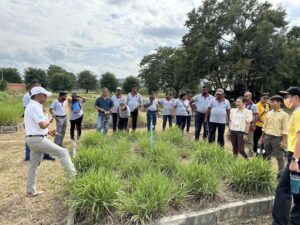
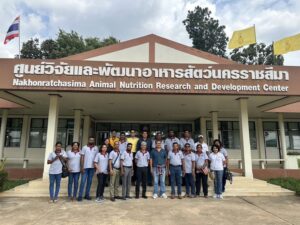
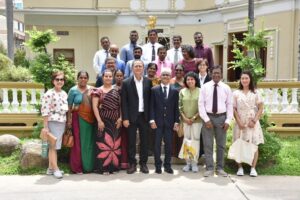
Dairy Asia Secretariat received a coordination request from a USDA-funded, market-oriented dairy project in Sri Lanka, seeking to study dairy farming practices within the region. In response, Dairy Asia facilitated a study visit to Thailand. The activity was successfully coordinated and organized in-country by Mr. Jeerasak Chobtang, Dairy Asia’s Focal Point in Thailand and a senior officer at the Department of Livestock Development, Thailand.

© 2026. Dairy Asia. All rights reserved. Developed by Mind Agency