Our guest today is Mr. R. Tsogtbuyan, founder and CEO of “Ulemj Organic”, Mongolia’s pioneering organic dairy farm and organic milk processing enterprise.
Mr. Tsogtbuyan is a livestock technician and a graduate of the Mongolian State University of Agriculture (now the Mongolian University of Life Sciences). He previously worked in his field at the Ministry of Food and Agriculture of Mongolia. During Mongolia’s transition to democracy and a market economy in the 1990s, he was at the forefront of the demonstration that led to the Democratic Revolution.
He has established a cluster farm encompassing agriculture, crop cultivation, animal husbandry, organic food production, processing, trade, and services. Together with several colleagues, he co-founded the Mongolian Dairy Farmers’ Association, where he currently serves as a board member. He is an innovator, an active civic participant, a technocrat, and a widely recognized leader in Mongolia’s dairy sector.
We extend our deep gratitude to you for accepting our invitation to speak with us.
Host: What is the meaning behind the name “Ulemj Organic”?
R.Tsogtbuyan:In Mongolian, “Ulemj” means large, immense, or great. With this name, I wanted to express the idea of collective effort that we will grow together, not alone. Because passing on our Mother Earth to future generations, investing in nature, and providing healthy food for the population are the most important goals. I believe that our sector’s production, consumption, and investment should be directed toward improving public health and conserving the environment. Therefore, when I founded the company in 2010, I looked to the future and named it “Ulemj Organic.”
Host: Fascinating name. On the value of organic products: many Mongolians believe that “our meat and dairy are naturally eco-friendly and organic”. How is demand for organic products growing internationally, and where does the gap in understanding lie?
R.Tsogtbuyan:Mongolia passed its Law on Organic Food in 2015. The growing international demand for organic products is a real trend. We Mongolians tend to think, “Our livestock graze on pasture, so our products are organic.” But in reality, certified organic products require a much higher standard. Certification is required at every stage of the value chain — from crop cultivation to feed production, dairy farming, milk processing, and trade. This is not easy. Most importantly, one must view the business through the lens of the entire value chain.
After the Organic Food Law was passed, we began preparing for organic certification. We planted 36 varieties of perennial plants on 35 hectares. We use no chemical fertilizers — instead, we rely on traditional livestock manure. Because we apply organic fertilizer to our pastures and crops, our transition was relatively smooth. We implement all proper practices: washing the farm and facility with organic detergent rather than chemicals, practicing crop rotation, and enclosing pastures for rotational grazing.
At the processing plant, even equipment cleaning is done mechanically, not with harsh chemicals like lye. We avoid stressing the animals, feed them at precise times, and carefully perform procedures such as teat disinfection. Animal welfare is of paramount importance. Training staff, changing their mindset, and achieving a shared understanding have been the most critical aspects of our organic production.
We have also begun promoting the organic movement making it understandable to consumers. This effort has been particularly well received by Mongolians who have studied, worked, or lived abroad. Because our products are of high quality, they are especially popular among elderly consumers. Although production is relatively costly, our policy is to price our products only 4–5% higher than conventional products on the domestic market. By comparison, in some countries, organic products can cost 15–300% more than conventional ones.
There are varying understandings of organic products in Mongolia. For example, wild berries growing near a paved road cannot be certified as organic. It is simply not possible. If consumers receive accurate, objective information about organic products, they will make better choices. Organic production is not mass production; it is a unique sector with its own characteristics. Developing this sector is of strategic importance to Mongolia, and the country has abundant potential and resources. We must put them to use.
Host: What kind of regulatory support do you expect from the government?
R.Tsogtbuyan:It is commendable that the Law on Organic Food was updated in 2024, and a new law on organic products generally — not just food — was passed. However, implementation needs improvement. Mechanisms such as tax incentives for organic production, exemptions from customs duties on equipment and organic inputs, and priority access to loans are not yet fully operational.
Most foreign countries strongly support their dairy sectors. Japan, for example, offers more than ten types of support for dairy farmers. Support is provided when raw milk meets standard requirements. They set targets such as an average of over 6,000 liters per cow per year over at least 305 days. They offer 100% low-interest loans for equipment upgrades and electricity discounts. In China, to give an example, farmers receive 500 yuan for each new female calf purchased. Countries focus support on building high-yielding dairy herds.
In Mongolia, during the winter months when milk supply is low, a bonus of 1,000 MNT per liter is provided to boost supply. Relative to the farm gate price, this is good support. However, looking ahead, investment support focused on improving livestock genetics, increasing milk yields, and enhancing farm productivity is essential.
Host: What are the most pressing issues you currently face?
R.Tsogtbuyan:We are working to resolve the issues we face. Every challenge also brings opportunities. Our Farmers’ Association is working to implement a contract forage program. In other words, farmers need to determine their feed requirements in advance, and the Association must coordinate collaboration on forage cultivation, production, and supply. For our company, we have the capacity to grow both organic and non-organic feed, as regulations allow for two separate feed lines.
The most difficult issue in our sector is the workforce. There is a shortage of stable, long-term workers. We have tried to hire workers from abroad, but there are many legal and implementation challenges. A farm requires the owner’s own active participation. I have been attached to farming since the socialist era, managing workers. We need to train the next generation. In many other countries, farmers pass their farms down to one child, while other children pursue their own paths. Passing the farm through generations is a strong cultural practice. In Mongolia, we are lagging behind. My youngest daughter studied livestock husbandry via distance learning. My children are primarily focused on working in our dairy processing plant. Raising children close to livestock and the industrial environment is crucial. We must pass our work on to future generations.
Host: In many countries, especially in developing Asia, agricultural cooperatives operate successfully and improve farmers’ lives. India’s dairy cooperative model — the Amul project — is a well-known example. In Mongolia, the government has shown considerable interest and supportive policies for revitalizing the cooperative movement. How do you assess the development of cooperatives in Mongolia, and what do you believe is the key factor for success?
R.Tsogtbuyan: The fundamental principle of a cooperative is collective strength. Only by pooling labor, capital, and knowledge can we overcome the challenges that are difficult to face alone.
However, our main concern is the legal framework. Current cooperative regulations have much room for improvement — for example, on generational succession. New members must fully understand the operating rules and respect collective property. Otherwise, collective assets risk becoming “nobody’s” and being squandered.
Another important point: members need to understand that when leaving a cooperative, they do not take their personal contributions with them. A cooperative is not a joint-stock company. Joining a cooperative is therefore not just about profit, but about embracing collective consciousness and responsibility.
Government support for establishing cooperatives is adequate at the initial stage, but there is a lack of momentum for sustainable, independent development. Simply put, the foundational elements — financial literacy, control mechanisms, and internal governance culture — are not sufficiently developed. Policies and regulations need to become more realistic and practical. Even though cooperatives receive low-interest loans, their repayment capacity weakens due to inflation. If nominal interest rates do not adjust while the real value of money declines, cooperatives face serious difficulties. Therefore, methods for adjusting loan repayments in line with inflation must be carefully considered and implemented.
Finally, a cooperative is not merely an economic structure; it is a mirror of social relations and trust. Developing cooperatives takes time, education, and genuine support.
Host: What would you say to young people entering your sector?
R.Tsogtbuyan:Mongolians love and respect their livestock and have a deep understanding of animal husbandry. However, the technology used in pastoral and farm-based operations is completely different. Pastoral livestock have high genetic potential, but farm livestock require far more attention to feed and care. Young people need to do thorough research and seek advice before starting.
Persistence is the most important quality. Do not be discouraged by difficulties. Do not be afraid of making mistakes, but do not impose your mistakes on others. You must find happiness in the work you do. It is important to turn information into knowledge, apply that knowledge, and achieve results. Hardship today may lead to happiness tomorrow. Success only comes through falling and getting back up.
Host: What are the three most important principles in your work?
R.Tsogtbuyan:
Host: How do you see the future of Mongolia’s dairy sector?
R.Tsogtbuyan:Mongolia’s dairy sector will undoubtedly develop stably and rapidly. Mongolians have a long and wonderful tradition of milking cows, yaks, mares, sheep, goats, and camels, and producing dairy products. We have strong knowledge and experience. For the sector’s development, supporting initiatives and — most importantly — connecting milk and dairy production to the market are essential. For example, although sheep milking has become rare in Mongolia, if we can connect it to the market and develop the value chain, herders will begin milking sheep again.
Highly developed dairy countries are moving away from Tetra Pak packaging and shifting toward low-temperature processing technologies. We too must carefully monitor future trends and move in that direction.
Host: What are your mid-term goals?
R.Tsogtbuyan:Our products are currently purchased mainly by Mongolians living and working abroad. Given that the international market for organic milk and dairy products is expanding, our company aims to begin exporting. We will continue to strengthen our cluster. We are currently supporting three other farmers interested in organic agriculture — mentoring them, helping them adopt good organic practices, assisting with forage cultivation, and supplying high-yielding cows. There is much to do.
We also aim to plant organic alfalfa and export feed. We have explored significant potential for cooperation with organic dairy farms in Bayannur Prefecture of Inner Mongolia, China, our southern neighbor. This work is relatively open.
Host: Final question. It would be fascinating. You were mentioned that you actively participated in the 1990 Democratic Revolution. Could you share your memories of that time?
R.Tsogtbuyan:Before 1990, Mongolia had a communist system with a centrally planned economy. The private sector had not yet developed. When the Democratic Revolution began, I was young and wanted change, something new. Large public demonstrations were emerged in Ulaanbaatar’s central square, and I stood in the front line with my comrades. The protesters behind us surged forward, and we in the front line advanced. Soldiers of the People’s Army were guarding the Government Palace, and we came face to face with them. I could feel their breath. I was young and not very afraid. At that moment, Sanjaasurengiin Zorig, the leader of the democratic revolution, addressed the crowd through a microphone. He said, “Colleagues, let us all take three steps back, and then let us sit down — everyone, please sit down.” In doing so, he prevented the demonstration from turning chaotic. What might have happened if he had not issued that call and led the demonstration properly? I clearly remember feeling a great sense of relief. That moment is one of the most important in my life. In a democratic, market-oriented society, if a person is proactive, hardworking, and diligent, success is achievable.
Host: Dear Mr. Tsogtbuyan, thank you very much for participating in this insightful and candid interview. May your great “Ulemj” endeavor continue to expand, and may healthy food become a rich and abundant part of every Mongolian’s table. We wish you continued success.
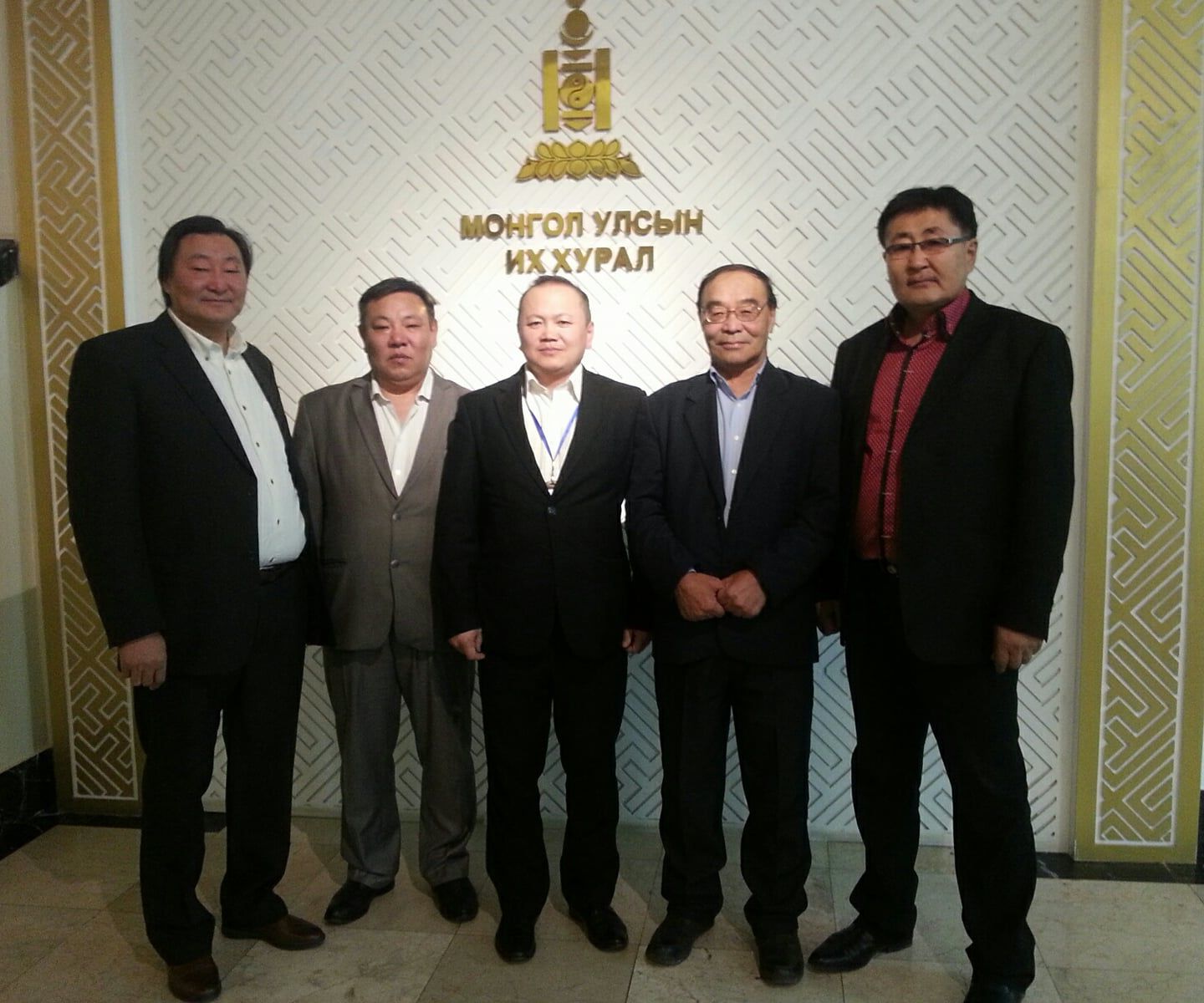
Photo: “With colleagues from the Mongolian Dairy Farmers’ Association in the Parliament House of Mongolia”

Photo: “During the Milk Walk parade in celebration of World Milk Day, 2o22 Ulaanbaatar, Mongolia”
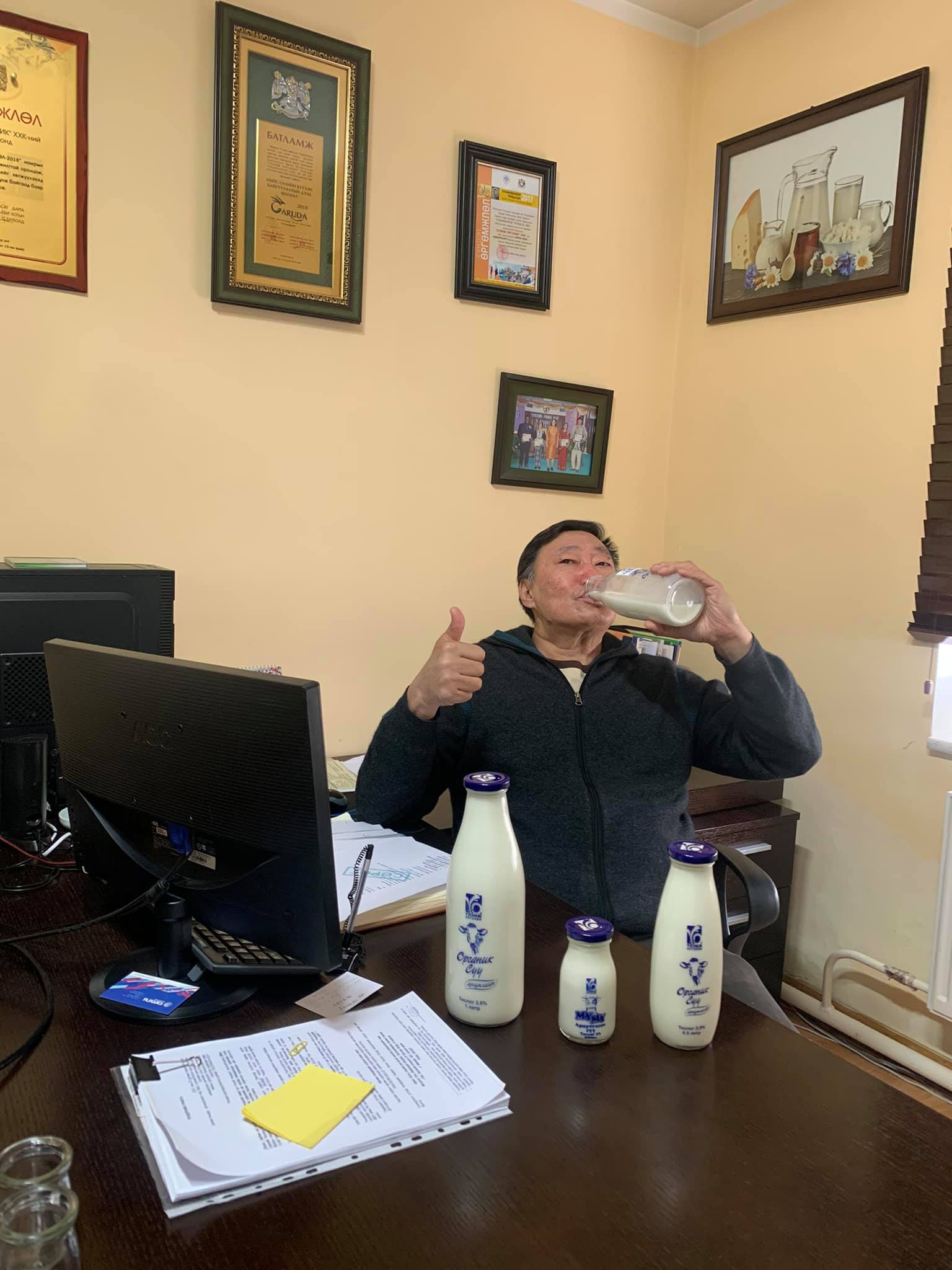
Photo: “Drinking & enjoying at the office”

© 2026. Dairy Asia. All rights reserved. Developed by Mind Agency