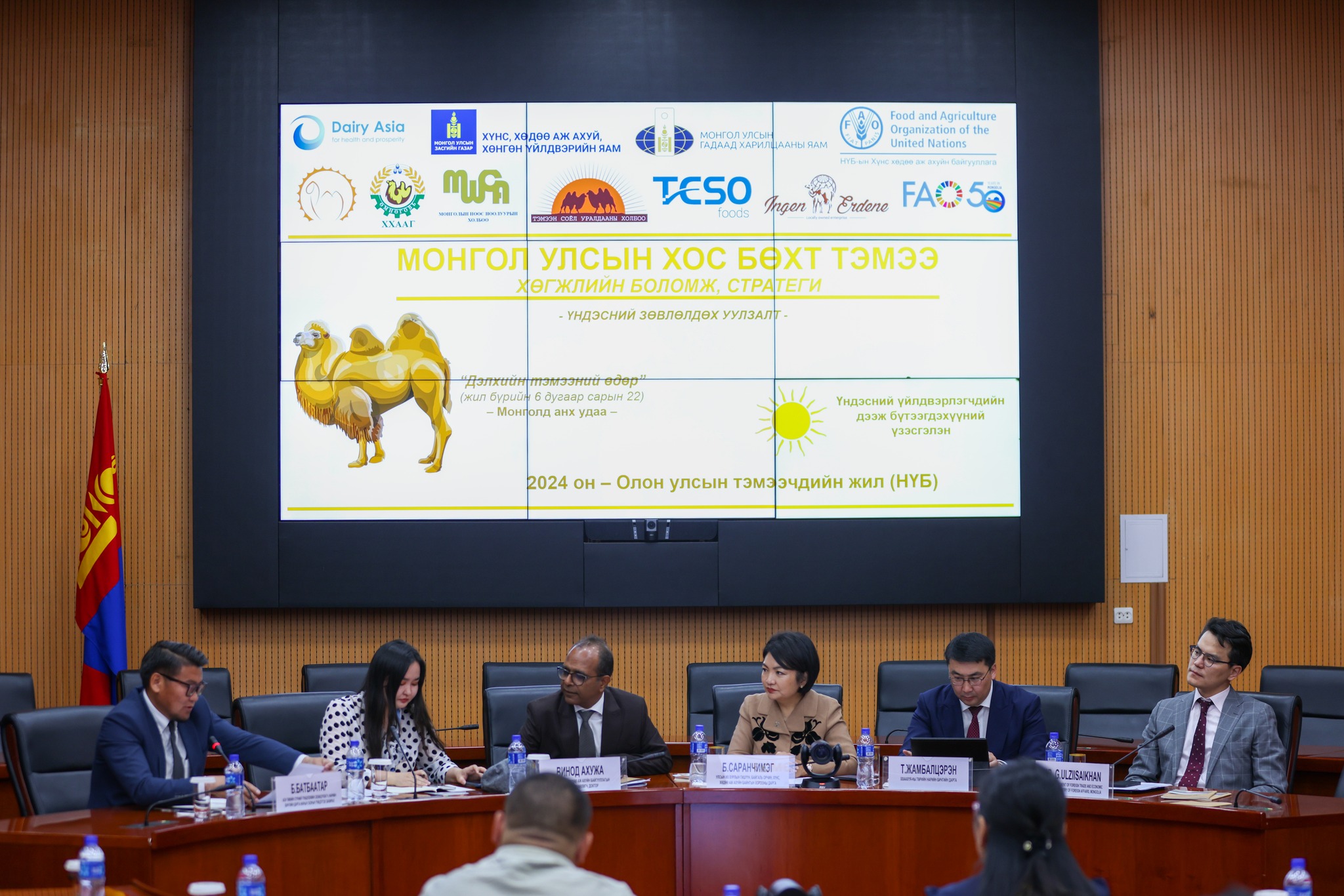
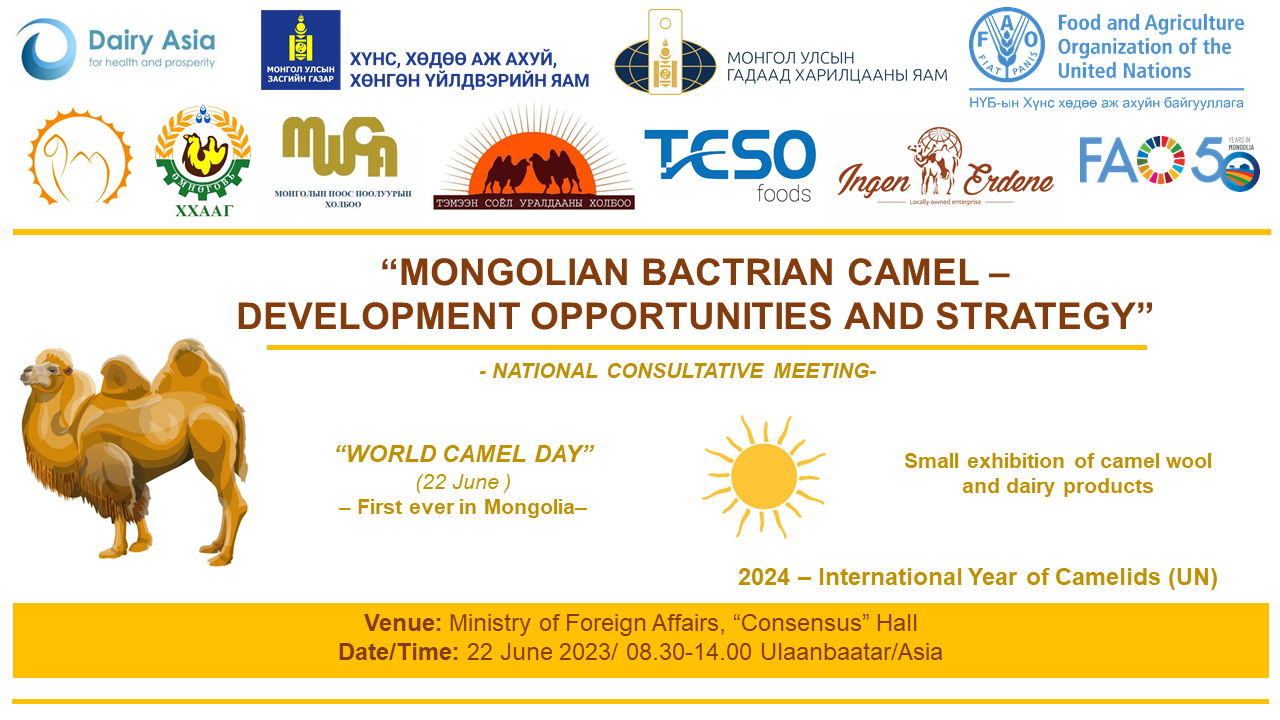
ULAANBAATAR, MONGOLIA – In observance of the first-ever World Camel Day, a consultative meeting titled “Mongolian Bactrian Camel – Development Strategy” was convened on 22 June 2023 by Dairy Asia in cooperation with the Food and Agriculture Organization of the United Nations (FAO), the Ministry of Foreign Affairs of Mongolia, and the Ministry of Food, Agriculture and Light Industry of Mongolia.
The meeting was inaugurated with remarks from high-level officials, including:
Ms. B. Saranchimeg, Member of Parliament and Chair of the Standing Committee on Environment, Food and Agriculture.
Mr. T. Jambaltseren, State Secretary of the Ministry of Food, Agriculture and Light Industry.
Mr. G. Ulziisaikhan, Director General of the Department of Trade and Economic Cooperation at the Ministry of Foreign Affairs.
Dr. Vinod Ahuja, FAO Representative in Mongolia.
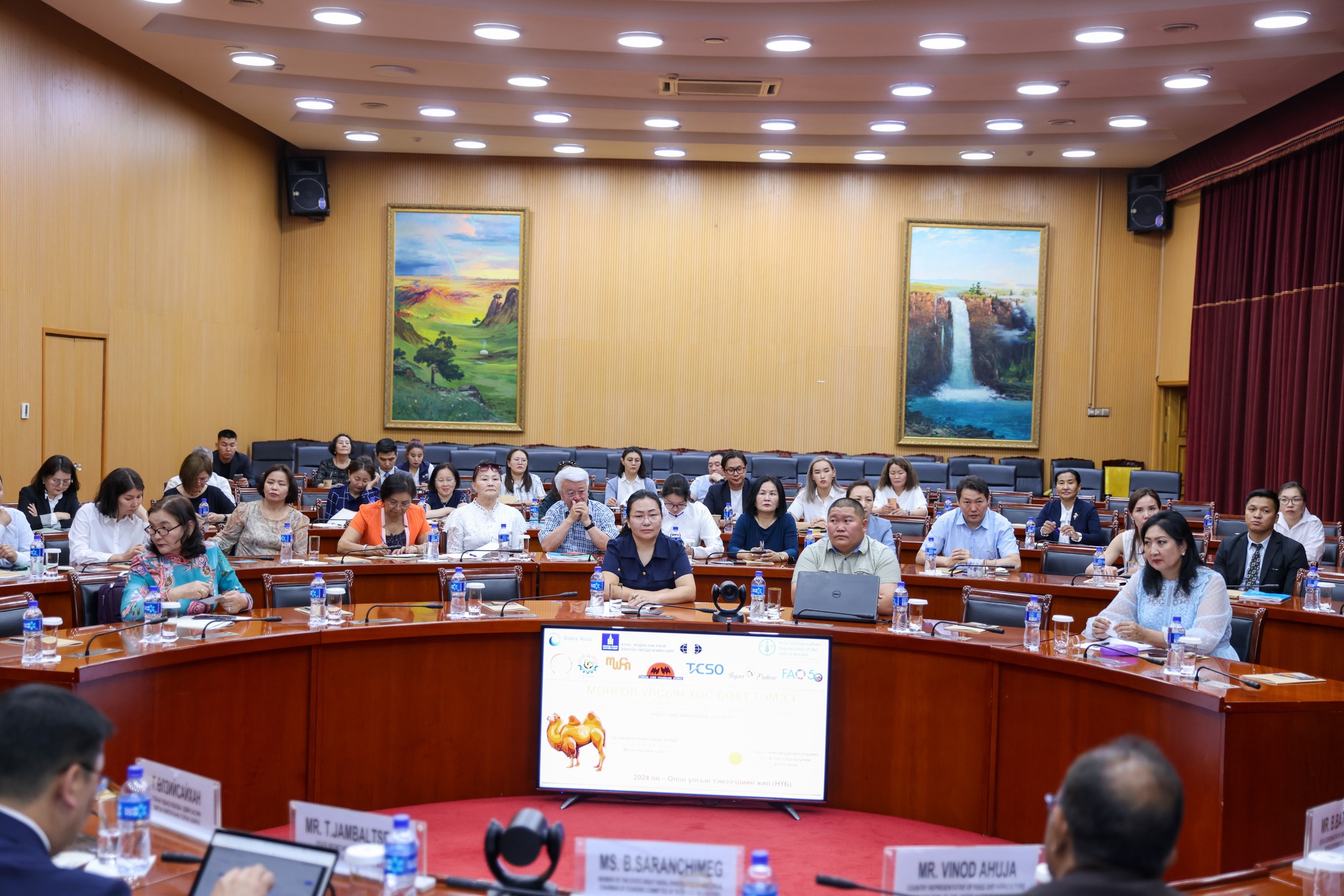
Under the moderation of Mr. B. Batbaatar, CEO & Coordinator of Dairy Asia, the meeting featured a series of comprehensive presentations from government agencies, industry associations, private sector entities, and research bodies. These covered a wide range of topics, including national policy on camel husbandry, regional opportunities, FAO project activities, the nutritional benefits of camel milk, export challenges and possibilities, and initiatives related to camel dairy farming, veterinary health, sustainable wool production, and cultural tourism.
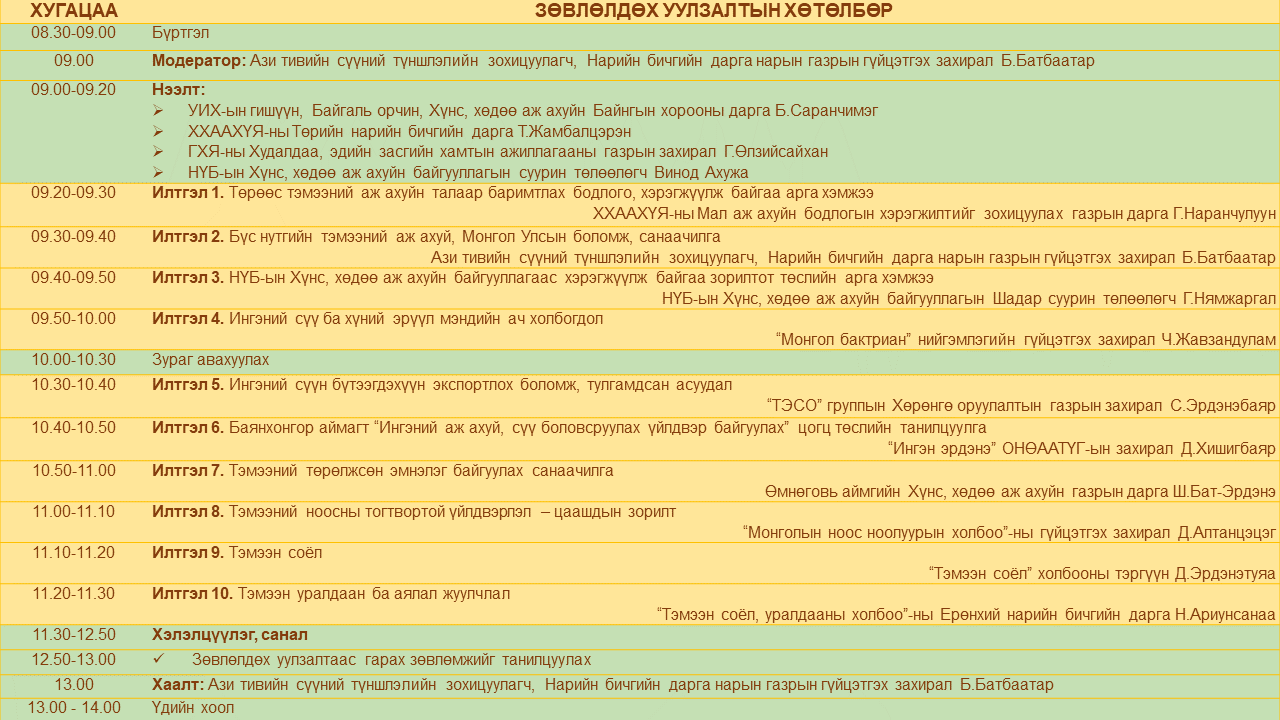
The agenda included the following topics and presenters:
“Policy and Activities on Camel Husbandry in Mongolia”
Presented by Mr. G. Naranchuluun, Director General of the Department of Animal Husbandry Policy Implementation and Coordination.
“Camel Husbandry in the Region: Mongolia’s Opportunity and Initiative”
Presented by Mr. B. Batbaatar, CEO & Coordinator of Dairy Asia.
“FAO Project Activities in the Camel Milk Production in Mongolia”
Presented by Ms. G. Nyamjargal, Assistant Representative, FAO Mongolia.
“Nutritional Benefits of Camel Milk for Human Health”
Presented by Ms. Ch. Javzandulam, CEO of the Mongolian Bactrian Association.
“Camel Milk Export: Possibilities and Challenges”
Presented by Mr. S. Erdenebayar, Director of the Investment Department, TESO Group.
“Project Activities for a Camel Dairy Farming and Milk Processing Factory in Bayankhongor”
Presented by Ms. D. Khishigbayar, CEO of “Ingen Erdene” LOE.
“Initiative for Establishing a Camel Hospital and Camel Research Center”
Presented by Mr. Sh. Bat-Erdene, Director of the Department of Food and Agriculture, Umnugobi Province.
“Sustainable Camel Wool Production in Mongolia and Further Goals”
Presented by Ms. Ts. Tuya, General Manager of the Mongolian Wool and Cashmere Association.
“Camel Culture”
Presented by Ms. D. Erdenetuya, Founder and Chair of the Camel Culture NGO.
“Camel Racing and Tourism”
Presented by Mr. N. Ariunsanaa, General Secretary of the Camel Culture and Racing Association.
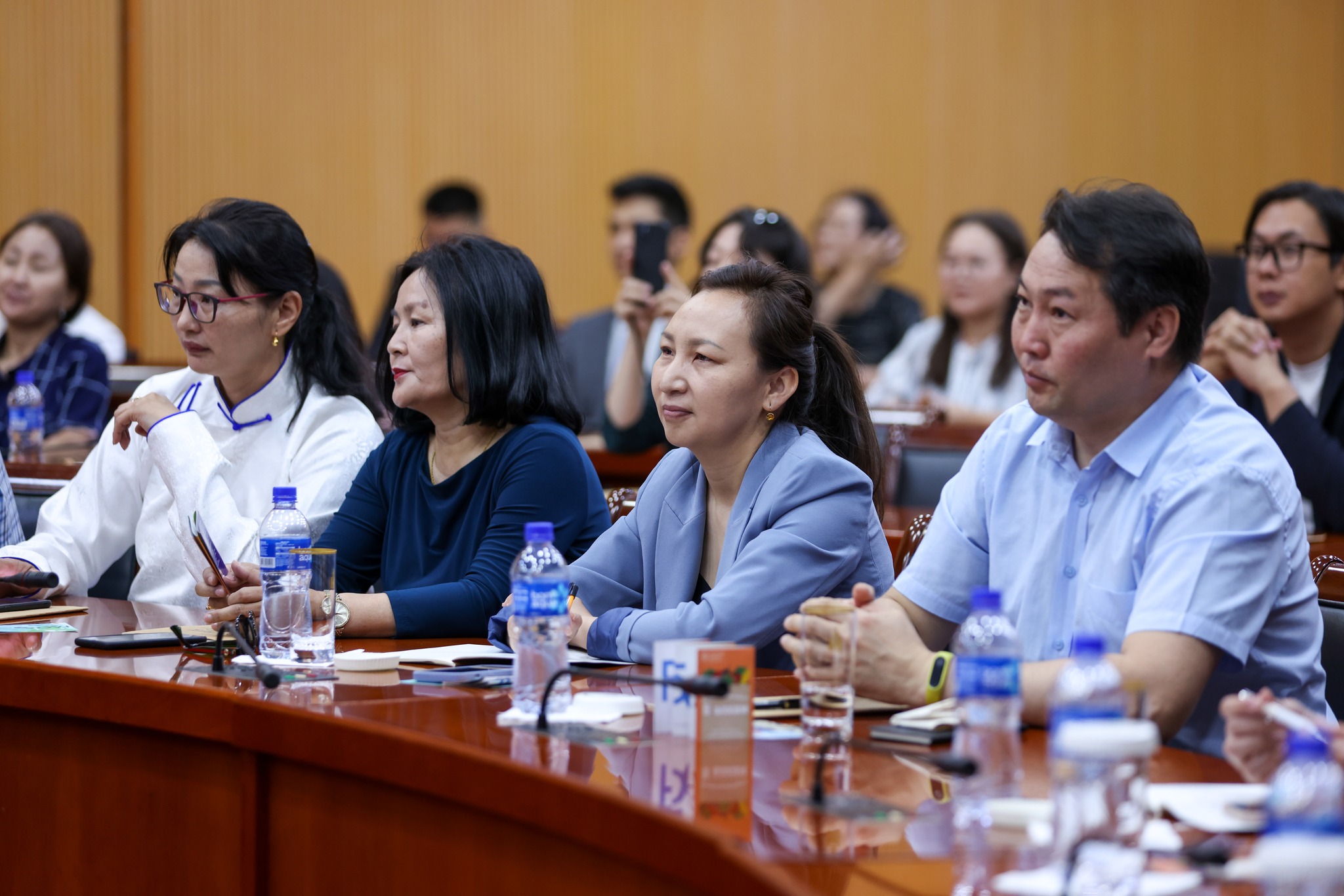
The discussions provided a thorough analysis of the current state of the Mongolian camel sector, focusing on husbandry practices, milk and wool production, and the intersection of camel culture with tourism. Participants identified key challenges, development opportunities, and the critical need for enhanced stakeholder partnership and cooperation.
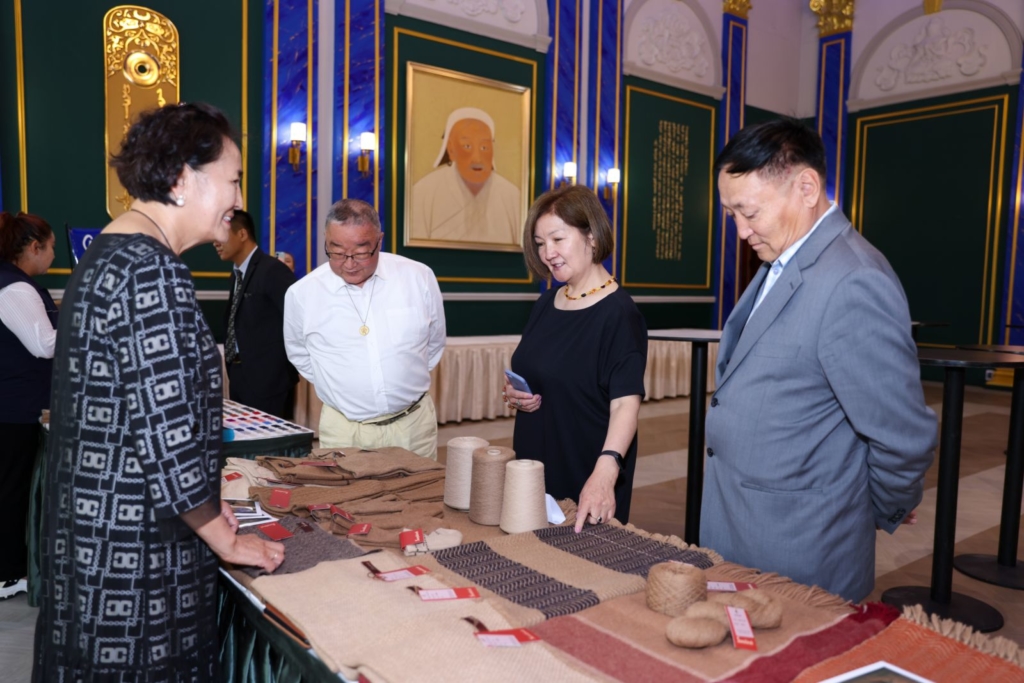
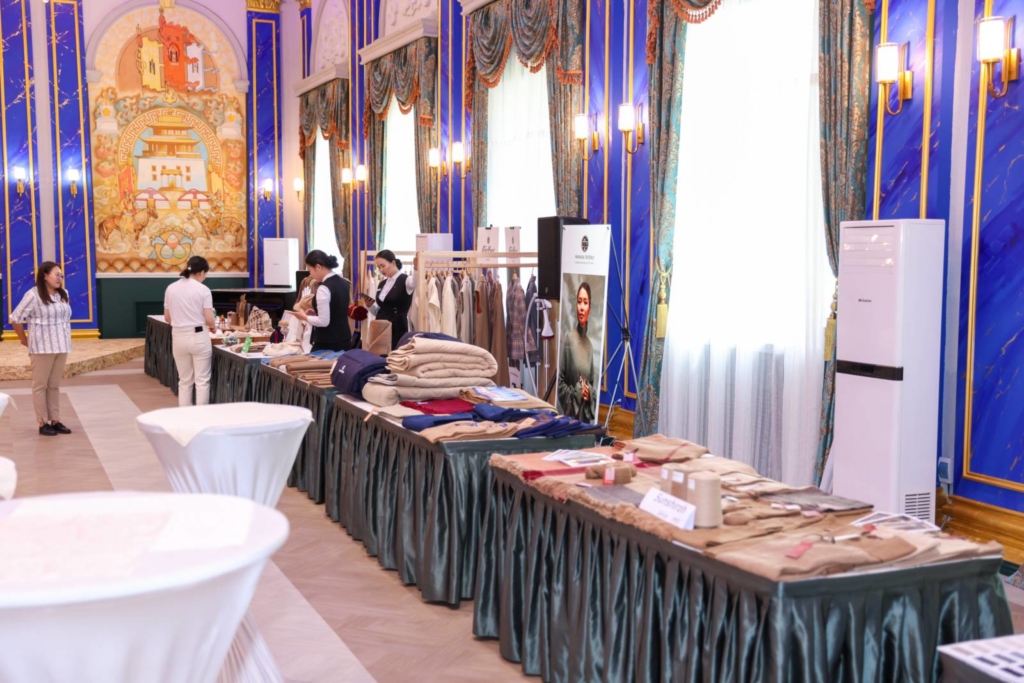
An accompanying exhibition showcased products from camel milk and camel wool producers.
Key Recommendations and Strategic Conclusions
The consultative meeting concluded with a consensus on a strategic roadmap for the sector, resulting in the following formal recommendations:
Formulate a National Policy: Develop and implement a long-term “Mongolian Camel” policy focused on protecting Bactrian camel genetics, improving breeds, increasing profitability, enhancing labor conditions for herders, and introducing advanced technologies.
Increase Camel Population: Support the growth of the national camel herd through targeted initiatives for camel milk, wool, and other derivative product industries.
Develop Export Value Chains: Build export-oriented value chains for camel milk and wool, create a global brand capitalizing on Mongolia’s unique Bactrian camel heritage, and establish a favorable legal and economic environment to support these efforts.
Strengthen Research and Development: Enhance scientific research on camel breeding, raw materials, and products; train a new generation of researchers; conduct market studies; and strengthen collaboration between research institutions.
Establish a Camel Milk Cluster: Building on the successful model of the “Yak wool and Baby camel wool cluster,” establish a “Camel Milk Cluster” to fortify partnerships between research institutions, government, local agencies, the private sector, and international organizations.
Implement Production Incentives: Introduce a cash incentive policy for dairy camel herders to stimulate increased milk production.
Support Veterinary and Research Infrastructure: Endorse the initiative to establish a Camel Hospital and Camel Research Center in Umnugobi province and facilitate the dissemination of knowledge and best practices to other regions.
Preserve Cultural Heritage: Create a comprehensive database and registration system for the tangible and intangible cultural heritage and traditional knowledge associated with camel husbandry.
Promote Camel Culture and Tourism: Actively promote camel culture domestically and internationally, and develop tourism brands centered on camel racing, polo, and other cultural attractions.
Scale Successful Models: Develop and disseminate the good practices from the FAO-supported model cooperative in Khanbogd Sum and the semi-intensive farming system in Khanhongor Sum to other regions.
Pursue Geographical Indications: Study the potential for Geographical Indication (GI) and Globally Important Agricultural Heritage Systems (GIAHS) registration for unique camel breeds, milk, and wool, based on Mongolia’s distinct natural environment and climate.
Establish a Global Association: Support the Dairy Asia initiative to establish a World Bactrian Camel Association in Ulaanbaatar to foster multi-stakeholder partnerships among Bactrian camel husbandry countries and promote the Mongolian camel sector globally.
Institutionalize World Camel Day: Commemorate World Camel Day annually in Mongolia to strengthen domestic stakeholder partnerships.
Host an International Forum: Jointly organize an International Forum of Bactrian Camel Husbandry Countries in Mongolia in 2024, dedicated to the UN-declared International Year of Camelids.

© 2026. Dairy Asia. All rights reserved. Developed by Mind Agency